Can Chemical Peels Help With Acne, Dark Spots and Uneven Skin Tone?
Acne marks, dark spots and uneven skin tone are common skincare concerns. They can affect the appearance of your complexion and make it difficult to achieve the smooth, even-looking skin you want.
One professional skincare option worth exploring is a chemical peel.
Chemical peels use carefully selected exfoliating ingredients to remove dead skin cells and improve the appearance of certain skin concerns. Let’s explore how these treatments work and what you should know before considering one.
1. Chemical Peels for Acne-Prone Skin
Some chemical peels contain ingredients such as salicylic acid, which can help exfoliate inside pores and reduce the buildup that contributes to certain types of acne.
Depending on the formulation, chemical peels may help:
- Improve the appearance of clogged pores.
- Reduce excess buildup of dead skin cells.
- Improve the appearance of certain acne-related marks.
- Support smoother-looking skin.
However, active acne and sensitive or inflamed skin require careful assessment before treatment.
2. Chemical Peels for Dark Spots and Pigmentation
Dark spots can develop due to sun exposure, hormonal changes, inflammation and previous acne breakouts.
Certain chemical peel formulations may help improve the appearance of uneven pigmentation by exfoliating the skin and supporting more even-looking skin renewal.
Ingredients commonly used in professional peels include:
- Glycolic acid
- Lactic acid
- Mandelic acid
- Salicylic acid
The best ingredient depends on your skin condition and treatment goals.
3. Improving Uneven Skin Tone
Uneven skin tone can make the complexion appear dull or patchy. Professional exfoliation may help improve the appearance of uneven texture and discoloration.
With an appropriate treatment plan and consistent skincare routine, some people may notice a more refreshed and even-looking complexion.
Results vary depending on the underlying cause of pigmentation and the type of peel used.
What Happens During a Chemical Peel?
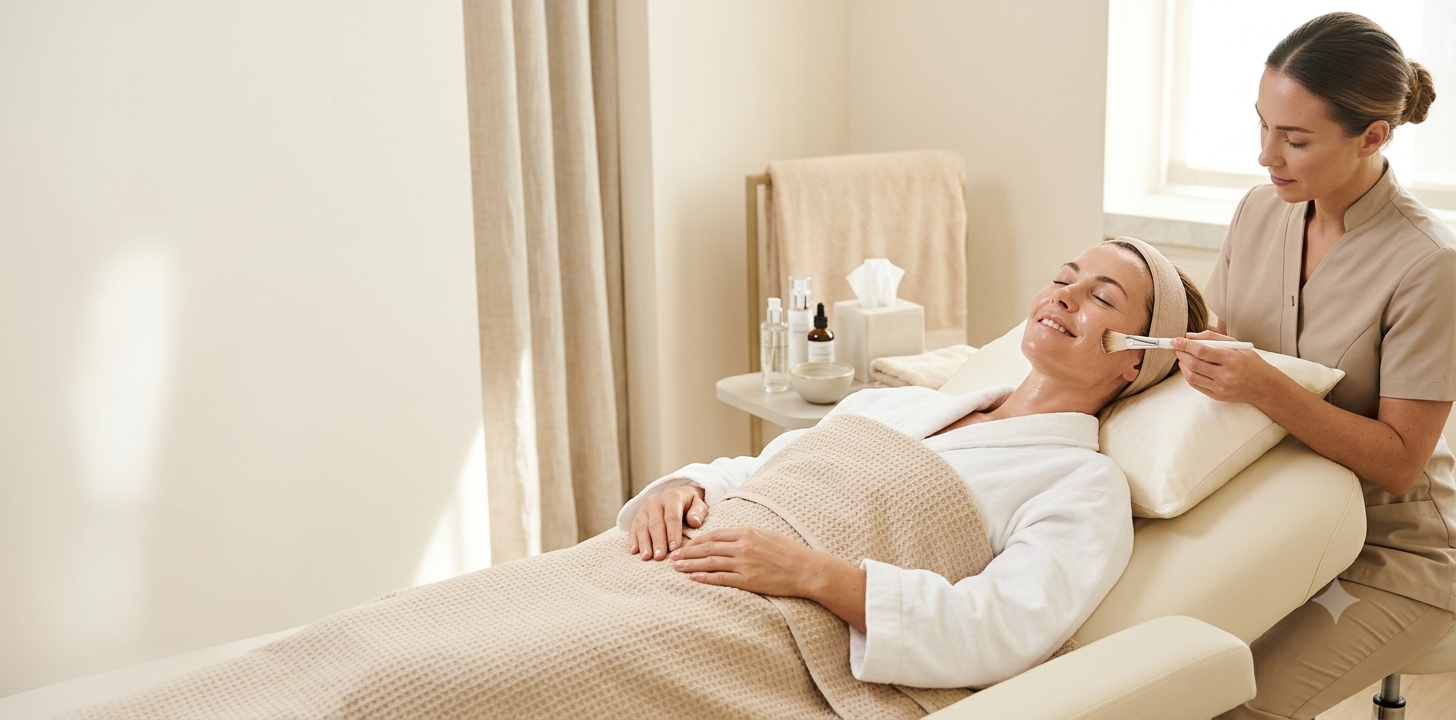
A typical professional chemical peel appointment may include:
Step 1: Skin Assessment
Your skincare professional evaluates your skin type, concerns and suitability for treatment.
Step 2: Skin Preparation
The skin is cleansed and prepared according to the selected peel protocol.
Step 3: Application
The selected chemical peel is carefully applied for an appropriate amount of time.
Step 4: Treatment Completion
Depending on the product, the peel may be neutralized or removed according to the manufacturer’s protocol.
Step 5: Aftercare Guidance
You receive instructions to protect your skin and support recovery.
Important Aftercare Tips
Taking care of your skin after a chemical peel is essential.
- Apply broad-spectrum SPF 30 or higher every day.
- Avoid direct and excessive sun exposure.
- Keep your skincare routine gentle.
- Avoid exfoliating products until your skin has recovered.
- Do not pick or peel flaking skin.
- Follow your skincare professional’s aftercare instructions.
Explore Chemical Peel Treatments at Spa Natural – Winnipeg
Every skin journey is different. Whether you are concerned about acne marks, dark spots or uneven skin tone, choosing the right treatment is important.
At Spa Natural in Winnipeg, you can explore professional skincare options and learn which treatments may be suitable for your individual needs.
Contact Spa Natural today to take the next step towards a healthier-looking complexion!